Why Crop Traders Don’t Struggle With Crops, They Struggle With Systems (By Gloria Minja)
May 31, 2026 • 5 min read
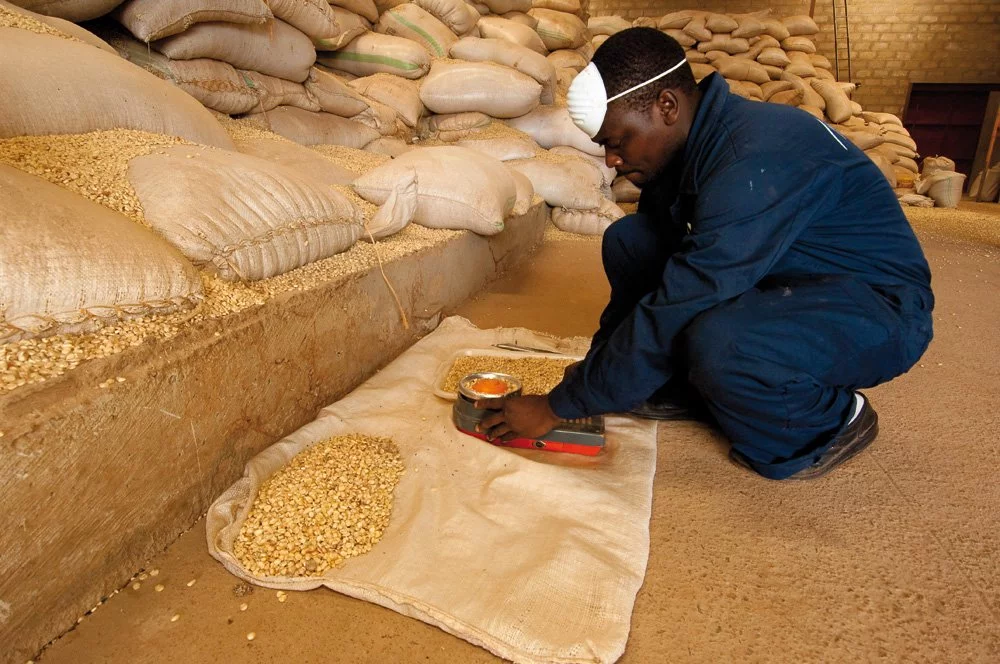
Most crop traders don’t wake up lacking ambition, experience, or market intuition.
What they often lack is something far more fundamental: visibility.
From the outside, crop trading looks straightforward. Produce moves from farms to markets, buyers meet sellers, prices are negotiated, and value is created. But anyone who has operated within this space knows the truth is far more complex. Crop traders are not fighting crops, weather, or even competition alone. They are fighting fragmented systems that force critical decisions to be made in the dark.
The Daily Reality of a Crop Trader
A crop trader’s workday rarely begins with certainty. It begins with questions.
Where are the crops available today?
In what quantities?
At what quality standards?
At what real price not the whispered one?
In most markets, this information exists, but it is scattered across phone calls, personal networks, and informal gatekeepers. Those who control information control negotiations. Those without it pay a hidden premium, often without realizing it.
This imbalance does not only distort pricing. It shapes who survives in the market and who slowly bleeds margins without understanding why.
Aggregation: Where Margins Quietly Disappear
Aggregation is one of the most underestimated challenges in crop trading.
A buyer needs 100 tonnes.
One farmer has 2 tonnes. Another has 5. A third has 10.
On paper, this looks manageable. In reality, without coordination and visibility, aggregation becomes a maze of transport costs, delays, repeated negotiations, and quality inconsistencies. Each small inefficiency compounds into a significant loss.
The problem is not volume.
It is the absence of structured information and coordination.
When aggregation is handled blindly, traders spend more time chasing supply than managing value.
Logistics: The Cost That Arrives Too Late
Logistics is often treated as a final step something to “figure out” once deals are already in motion. This approach is expensive.
Transport availability, route efficiency, timing, and risk are rarely visible early enough to be planned strategically. As a result, logistics costs quietly eat into margins, sometimes turning what looked like a profitable trade into a loss.
When logistics are invisible, traders absorb risks they never priced in.
Misinformation and Market Noise
In many crop markets, information travels faster than verification.
Prices are shared verbally.
Demand is assumed.
Market conditions are guessed.
This environment creates noise rather than clarity. Decisions are made under pressure, not confidence. Traders often carry the full burden of uncertainty, while the system offers them little protection.
The market becomes reactive instead of predictable.
The Real Problem Isn’t the Trader; It’s the System
It is tempting to attribute these struggles to individual traders, farmers, or middlemen. But this framing misses the point.
The real issue is systemic fragmentation.
When information is disconnected, coordination breaks down. When coordination breaks down, everyone pays more in time, in money, and in trust.
Crop trading does not fail because people lack effort.
It fails because infrastructure for visibility, coordination, and trust is missing.
Rethinking How Crop Trading Should Work
Sustainable crop trading requires a shift in thinking.
It requires:
Reliable data from the field
Clear visibility of quantities and quality
Mapped aggregation points and warehouses
Logistics that are planned, not improvised
Systems that connect people through information, not speculation
This is not about replacing traders. It is about supporting them with systems that reduce uncertainty.
Toward a Different Kind of Infrastructure
The future of crop trading will not be built by adding more intermediaries or relying on stronger personal networks alone. It will be built by infrastructure that connects data, logistics, and trust into a single, coordinated ecosystem.
This way of thinking is what ecosystems like CropSupply.com are designed around not simply connecting buyers and sellers, but addressing the invisible gaps that quietly undermine trade.